
FORWARD
Just after midday on January 2 1963, a funeral cortege left a Hobart undertaker’s chapel for the Cornelian Bay Cemetery. Enroute, the procession diverted to Liverpool Street, slowing as it passed the historic Royal Hobart Hospital. The hearse was carrying the body of 83 year old Dr Victor Richard Ratten. C.B.E Doctor Ratten had served as the hospital’s Surgeon Superintendent from 1917 until his resignation in 1936. As a part-time surgeon his connection with the institution continued for many more years. In a unique tribute, nurses in red capes formed a guard of honour outside the hospital complex.
Prominent people from all aspects of Dr Ratten’s life attended his funeral service; politicians, medical men, and leading figures from the racing fraternity. As a veteran of WWI he was honoured with a soldier’s farewell.
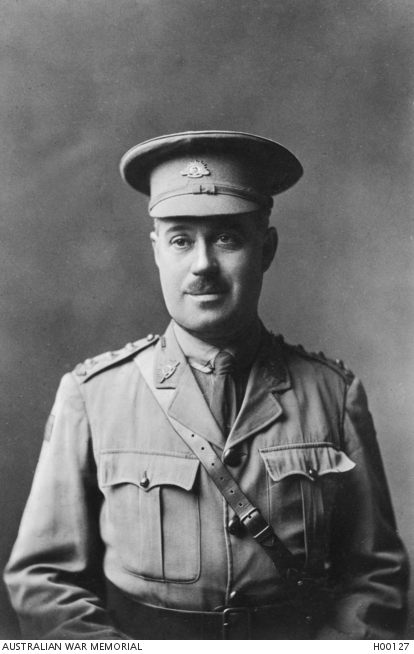
Victor Ratten photographed in 1914. He enlisted as Regimental Medical Officer to the 12th Battalion.
The traditional poppy service was recited at the graveside and a bugler sounded the Last Post. The national flag was held over his coffin by pallbearers as it was lowered into the ground.
However, little about this man’s life was at it appeared. Perhaps the truest words spoken that day were by Canon H.C. Cuthbertson. Paying tribute to the dead surgeon he said that Dr Ratten had served mankind, ‘…with the talents with which God had endowed him’. Many who read the newspaper reports of the funeral next day must have smiled inwardly at the churchman’s unintentional irony.

Dr Victor Ratten (seated) in the 1920s.
THE SCHOOLMASTER’S SON
Victor Richard Ratten was born in the Melbourne suburb of Kew on December 12, 1878,. He was the eldest son of schoolteacher George William Ratten and his wife Annie (nee Gordon) . George (born 1857) had been educated at Kew High School . In 1874 he matriculated to Melbourne University, but became a teacher instead of studying for a degree. By the time Victor’s brother Frederick came along in 1880 their 23 year old father was already principal of Kew Grammar School.
Later that year the family moved to the small town of St Arnaud, in the central west of Victoria. George Ratten had purchased a co-educational private school known as The St. Arnaud Grammar School For Boys and Girls.

Source – Port Fairy Historical Society
Over the next few years George and Annie had four more children; Aubrey (1881), Arthur (1884) Gertrude (1886), and Gwendoline (1888). Victor was old enough to understand and share his parents grief when little Gertrude died aged just eleven months. The cause was initially reported as typhoid fever, which would have been disastrous for the school, but this was corrected in an obituary notice to; ‘a severe brain effusion’.
Life at St Arnaud was busy for headmaster George Ratten and his assistant The school catered for both boarders and day students, including infants. Private tutoring was also offered. Evening classes and .music tuition were available to local people. In 1882 there was an expansion of the college via amalgamation with a young ladies college.
George was heavily involved in community activities, becoming a leading member of the Manchester Unity Lodge. He was energetic, entrepreneurial, and ambitious. So ambitious that he deliberately misrepresented his qualifications. In advertisements for the school he appeared as G.W, Ratten (Melb. Univ.) giving the false impression that he was a graduate.
In 1890, when the school moved to new premises in Inkerman Street, a system of ‘Patent Refrigeration’ was installed. ostensibly to improve the comfort of students in the intense summer heat. It is remarkable that a headmaster in a small rural town should have introduced one of the earliest versions of air-conditioning, and may have been prompted by George’s own delicate health. In January the following year he announced that his doctor had advised him to live in a seaside location.
St Arnauds Grammar School was sold and the family moved south to the small but charming town of Port Fairy. Here, Victor’s father became principal of another private, co-educational college. It was housed within substantial two storey premises in Sackville Street, originally constructed in 1848 as the Stag Hotel. Now known as Seacombe House, the building still stands and has changed very little.

As at St Arnaud, the curriculum at Port Fairy College prepared boarders and day students for university, the civil service, or commercial life. The physical benefits of a seaside location were heavily promoted; ‘Delicate pupils especially cared for.’ ‘The Sanatorium of Victoria’. In addition to sports such as cricket and tennis, students competed in swimming and sailing events. George Ratten became secretary of the town’s annual regatta. For Victor and his siblings, Port Fairy must have seemed like heaven on earth. Victor took advantage of everything on offer, and sport would always be an important part of his life.
In May 1892 his father established a military cadet unit at the college. Mr Ratten drilled the young men himself, adopting the rank of Lieutenant. Sergeant-Major Sissons from the volunteer Victorian Rangers trained the cadets in target shooting. Several months later Corporal V.R. Ratten appeared in the Portland Guardian as participating very creditably in an inter-school shooting competition.
Annie Ratten had assisted her husband in the early days at St Arnaud Grammar, but as her family grew she had less and less time to spare. She gave birth to her seventh child, Pearl, at Port Fairy. Growing up in a large family and sharing his home with boarders meant that Victor became a gregarious, confident young man with highly developed inter-personal skills He would also inherit his father’s driving ambition.
In late January 1893, just as the new school year was about to commence, a brief, paid advertisement appeared in the Horsham Times (20/1/1893);
PORT FAIRY COLLEGE
Boys and girls. Vacancies for boarders. All the educational advantages combined with the pleasure of the seaside. Free bathing, etc. Salubrious climate. References ad lib.
The paper’s editorial that day included a far more extensive account, mentioning Mr Ratten’s long experience in teaching and emphasizing the superb location of the college. Obviously George had a useful connection on the paper. He would employ this method of promotion to great effect in the years ahead, but eventually it would be Victor who perfected the art
Forty years later an old boy reminisced about his time at the school in a letter to The Age. (May 30 1936) His most vivid memory was of a fist fight between Victor and a boy called Les Earle, in a barn at the rear of the college. The aptly named ‘Posty’ Howell was stationed as lookout, but the combatants’ bruises and blackened eyes left clear evidence of a ‘blue’, and headmaster Ratten was enraged. His son was expected to set a good example, and this had tarnished the reputation of the college. To make matters worse, George played lawn bowls with young Les’s father, and served with him on the local fire brigade. Both boys were thrashed with a green-hide whip the following day, in front of the assembled students. It’s a shame the letter writer, who signed himself ‘Caulfield of Port Fairy’, didn’t say what the fight was about, or who won.
In mid April the following year George Ratten uprooted his family again. The townspeople very much regretted his departure, and he was farewelled as a highly respected resident. A function in his honour was attended by Victoria’s Minister for Education Oddly enough, George was abandoning the seaside air his doctor had recommended for an inland town with a climate similar to that of St Arnaud. In this instance he appears to have been motivated by financial considerations rather than those of health. It would prove to be a life-changing move for Victor, now aged 15.
TO BE CONTINUED,,,,,

Pauline, your stories are fascinating. I can guess what happens, but keenly await Part 2!
Thanks so much Megan. I was prompted to start publishing chapters after an approach from Harper Collins a few days ago. An editor there had read about my work on the book and offered to help publish it. For various reasons I will have to refuse, but felt I should share what I have.