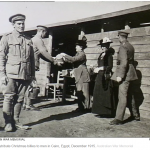
Soldier Settlement was a federal, but state administered initiative which began during WWI. Land was purchased by government to provide small farms for returning servicemen, often on leasehold. One person who applied was my great-uncle Arthur Singleton, from Ulverstone. With the 12th Battalion he had taken part
Read more →Our first troops left Australia in late October 1914 following the outbreak of World War I. They disembarked in Egypt at Alexandria, and were then moved to a vast encampment near Cairo, where they continued to train in the shadow of the great pyramids. Soon, it was
Read more →Joseph Aloysius Lyons was four years old in 1883, when his father Michael moved the family to the Tasmanian seaside town of Ulverstone. Mr Lyons Snr. opened a bakery and butcher’s shop, but unfortunately he fitted the description of ‘feckless’ rather well, and lost everything betting on
Read more →One of the most successful Tasmanian racehorse owners of the 1940s and 50s was the controversial surgeon Dr. Victor Ratten. He was Surgeon Superintendent of the Royal Hobart Hospital for many years (1917-1936). Dr. Ratten’s success on the track was despite the fact that in 1911 he
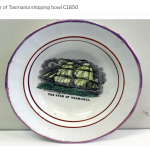
Read more →In 2012 a bowl featuring the ship Star of Tasmania was offered for sale by Gowans Auction House in Hobart; Other items related to this ship have appeared for sale over the years. It must have been a very special vessel. From Launceston’s Cornwall Chronicle on Saturday,
Read more →Loongana is an Aboriginal word meaning to be swift, or to fly. There would come a time when this ship would desperately need to live up to its name. The Loongana was built in 1904 on Scotland’s River Clyde. She plied the Bass Strait for many years
Read more →For some years British born Captain William Waterson had been involved in an on-again, off-again relationship with Marion ‘Dorothy’ Jackson. Dorothy, 25 years old, lived with her wealthy, widowed mother Matilda at No. 2 Pillinger Street, Sandy Bay, an upmarket suburb of Tasmania’s Hobart. In 1922 the
Read more →When I was growing up on a farm in north-west Tasmania our fences were mainly barbed wire, supported by blackberries. I loved seeing the English style hawthorn hedges when we ventured further south, especially driving through sheep country in the Midlands. Here is an account of hawthorn
Read more →The Blue Mountains town of Blackheath has always attracted visitors during the festive season. The following report appeared in the Lithgow Mercury, dated January 6 1899; BLACKHEATH – According to reports from different towns the railway traffic to the Mountains this Christmas and New Year has largely
Read more →In 1903 there was a public vote to determine whether Mr F.H. Furner’s new hotel in the seaside Tasmanian town of Ulverstone should be granted a liquor licence. Surprise, surprise….the ayes were in the majority. The old Queen had died the previous year, but the design was
Read more →